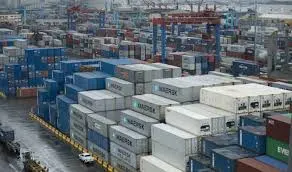
Nigeria and the United Kingdom have signed a landmark £746 million ports financing agreement, in a major infrastructure push expected to modernise key maritime assets and support thousands of jobs across both economies.
The deal, backed by UK Export Finance (UKEF), will fund the redevelopment of the Lagos Port Complex and Tin Can Island Port Complex, two of Nigeria’s busiest trading hubs, through a structured Buyer Credit Facility arranged by Citibank N.A.
The agreement involves the Nigerian Ports Authority and the Federal Ministry of Finance, and is expected to significantly enhance port efficiency, reduce cargo delays and lower logistics costs for businesses.
At least £236 million of the total financing will flow to British firms, underscoring strong industrial linkages, with British Steel securing a record £70 million contract to supply 120,000 tonnes of steel billets for the project, its largest UKEF-backed export order to date.
UK Business and Trade Secretary, Peter Kyle, described the agreement as a major boost for British manufacturing, noting that it reinforces the global competitiveness of UK steel while supporting jobs and growth.
On the Nigerian side, Minister of Marine and Blue Economy, Adegboyega Oyetola, said the project marks a critical step in unlocking the country’s maritime potential, adding that modernised infrastructure and automated processes will significantly cut vessel turnaround times and cargo dwell periods.
He noted that the upgrades are expected to improve transparency, accelerate cargo clearance, reduce demurrage costs and strengthen Nigeria’s position as a leading maritime hub in West and Central Africa.
Alongside the ports deal, both countries also signed a Memorandum of Understanding to deepen trade and investment cooperation, outlining a pipeline of future projects eligible for UKEF financing and broader UK private sector participation.
The construction works will be executed by Hitech Nigeria and ITB Nigeria, firms with a track record in large-scale infrastructure delivery, while the financing structure reflects one of the largest export credit-supported facilities in West Africa.
According to UKEF, support for West and Central Africa has grown by more than £3 billion since 2018, highlighting increasing demand for diversified trade partnerships and long-term capital investment in the region.
The agreement is expected to send a strong signal to global investors, reinforcing Nigeria’s commitment to infrastructure development and positioning its ports system for greater efficiency, competitiveness and revenue generation.
Leave a Reply